Christian Smith: It’s difficult to think of too many other occasions in the 21st century when there have been more unanswered questions about the direction of the world. How will the war in Ukraine end? Will Iran get nuclear weapons? Will Europe unite or remain divided? Can the US withdraw from the Eastern Hemisphere without leaving catastrophe behind? I could go on. We receive a lot of subscriber questions here at Geopolitical Futures. So on this episode of the podcast, we wanted to try and answer some of them. My name is Christian Smith. Welcome to this podcast from Geopolitical Futures. Thanks for joining us. I am joined by Geopolitical Futures chairman and founder, George Friedman. And today. Well, our list of questions have all come from Geopolitical Futures subscribers. And as we begin, I should say geopoliticalfutures.com of course, is a subscriber platform. And every week George picks a few questions that have come in from readers in response to the articles were published that week, and he writes a piece answering them. So if you do want to get your question answered by George, who some have described as the closest thing geopolitics has to a crystal ball, you just need to go to geopoliticalfutures.com George, hello. How are you? How are you, Mr. Crystal Ball?
George Friedman: Crystal ball, huh? You think I should like that, huh? Oh, yeah. Let’s move on
Christian Smith: before we jump into questions. I mean, George, it is. It is seemingly a very complicated moment for geopolitics. It is. There’s a lot of unanswered questions, as I said, and it seems hard to know where we’re going. Would you agree with that?
George Friedman: Well, we are going through a very normal transition when we go back, not to the beginning of this century, but to the beginning of the 20th century. This is nothing like World War I, World War II, the Cold War, where we were constantly fearing nuclear war and so on and so forth. So this is not an extraordinary event. Now, if you’ve never lived through one of these or you’ve never studied these things, you’ll feel that the world is falling apart. But this is actually a normal process. Geopolitics is constantly changing and sometimes intensely shifting. And we’re in one of those periods. But we should not say something like, we’ve never seen anything like this. We certainly have.
Christian Smith: In some ways, that should be reassuring. I suppose we’ve had this before, we’ll get through it. But that doesn’t really feel like. But that doesn’t really feel the case to me. What do you think?
George Friedman: Well, if you’ve never lived that long and you’ve never been buried in history. It feels like everything is falling apart. If you’ve lived 20, 30 years, 40. Okay. And remember the time we tried to attack Iran and save the hostages that were in Iran, all these things. You go back there and there’s a lot of similarity, not in detail, but this is the nature of the global system. There’s always somewhere in the world where there’s conflict, and sometimes conflict is all over the world, and that’s simply the way it is. But given the fact that human beings are alive now, many who weren’t alive then, this seems to be like a catastrophic moment. We human beings constantly do this and constantly survive.
Christian Smith: And particularly for those like, if you’re like me, born at the end of the Cold War when everything wasn’t rosy. Since then, obviously we’ve had lots of ups and downs, but the geopolitical system as a whole has seemed relatively stable until recently.
George Friedman: Well, it seems to me to destabilize pretty well with the Russian invasion of Ukraine, which was quite a few years ago. It also became very unstable between Israel and the Arabs many times, not just Hamas or anything like that. And the U.S.-Chinese relationship was very tense, more tense than it is now. So when you go back into that period of time, I’m not seeing this as a uniquely dangerous period of time. I see all of history as dangerous, but not uniquely. And that’s where we are now.
Christian Smith: It’s that sort of positivity we come to this podcast for. George, let’s get to the questions. We’ve had several in on Iran and what’s going on in the Gulf as well. The first question was, if the US decides to end the war without forcing Iran to abandon its nuclear program, how else can Washington prevent Iran from developing nuclear weapons?
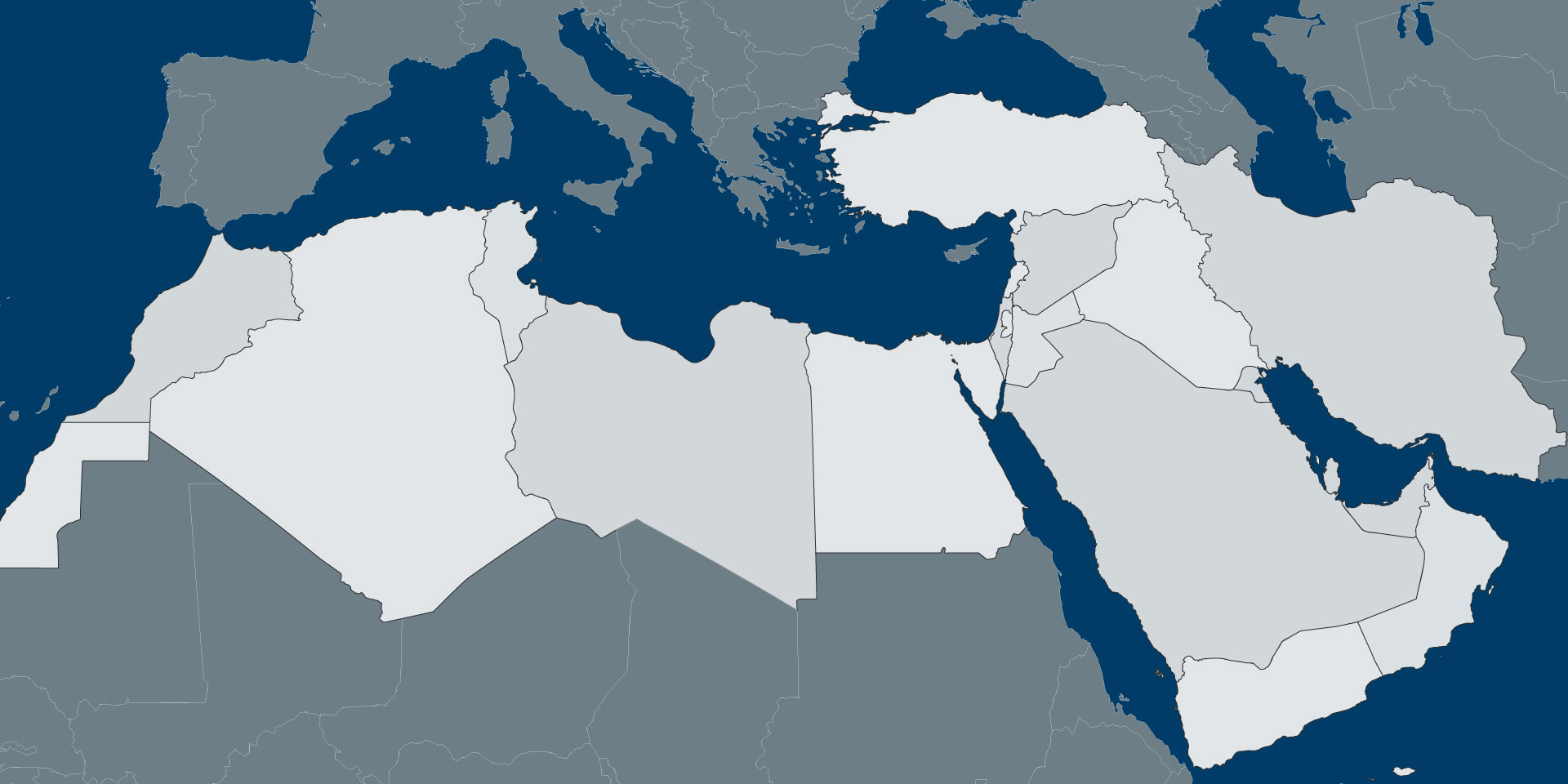
George Friedman: Well, the United States really does not want Iran to develop those weapons. I’ve spoken many times on nuclear 9 11s and stuff like that, but Turkey, Saudi Arabia, Pakistan, the Mecca accords, and all the other nations in the Middle east do not want to see Iran developing nuclear weapons. What has happened here is that we took it on ourselves to try to destroy the weapons. First by bombing them, failing to achieve that, then by thinking that if we destroyed the leadership by air attacks, Iran will collapse. It didn’t, because these weren’t leaders. So what I’m looking at the situation is that this is a situation that is very difficult to solve militarily, very difficult to solve economically. So one of the things that may happen is that they do get a nuclear weapon. But remember, the worst enemies in the world. The United States and the Soviet Union never used a nuclear weapon against each other or any case after Japan. Okay, so there’s a reason for that. It’s called mutual assured destruction. It is the concept that if you launch missiles at the United States and they detect the launch with all the satellites and everything else, the Americans will respond. Now, Pakistan is already a nuclear power. Turkey could become a nuclear power if it wanted to free fairly quickly or just get somewhere nuclear weapons from Pakistan. So the idea that in this case it would be uniquely dangerous if the Iranians had a nuclear weapon is true in some ways, given the way ideologically they’ve spoken and acted in the past. But at the same time, the most important people who don’t want to have that is not the United States, it is Saudi Arabia, Yemen, Azerbaijan, all these countries. So this is not simply a US confrontation with Iran. This is the region itself restructuring itself. What the President, I think, wants is to withdraw from that and put the burden on the others.
Christian Smith: How does that avoid, though? Because as you sort of say there, there’s sort of two sides to it. How did that avoid then a nuclear 911 type situation involving the United States?
George Friedman: Well, that’s the fundamental issue. Okay, Remember what the nuclear 911 was? It was inserting covert operatives into the United States who were trained in the United States how to fly a plane who then willingly went to their deaths crashing into the World Trade Center. Okay? So if we assume that there’s some continuity in this, okay, and we assume that they in having nuclear weapons would potentially pose a very different danger, the United States, than any other nations having it, then the United States must do something. Now, what to do is a problem. So in geopolitics there is two things to look at. What must be done, what can be done, and the two things frequently don’t coincide. But remember one thing. The Mecca accords created three powerful nations around Iran and not one of them want Iran to have a nuclear weapon. So don’t pose this simply as an American issue. This is a regional issue.
Christian Smith: Well, look, coming to those Mecca accords, the next question we’ve got is, is the Mecca agreement going to be an effective rearrangement of the geopolitics of the Middle East? And I guess I’d expand on that by saying, is it actually going to be a serious force to be reckoned with or is it going to be a bit of a. Bit of a dud?
George Friedman: That’s what we always talked about. NATO, is this a serious force or just a Lance, in this particular case, as with NATO, really, Iran poses a fundamental threat to Saudi Arabia, a very rich country, to Turkey, a military, a very powerful country, and Pakistan, a nuclear power. In other words, when you take a look at the necessity of liquidating nuclear weapons and in Iran, you then take a look at the capability of doing so. And these three nations have substantial capability and a great interest in doing so. So I think one of the things that has happened during this war was the emergence of the Mecca accords, in which I think the United States had a major hand pulling it together. And these people are at this point basing an existential threat from ran. Now the United States is involved as well, and there are other consequences of this, like oil and so on and so forth. But the Mecca accords is not an alliance because they’re friends, they like each other and stuff like that. It’s something necessary. They’re the ones who can’t live with Iranian nuclear power, and therefore they must do something. And when you take the three powers together, one thing, you know, everybody wants the other guy to take the risks. Okay, that’s just like NATO, okay, we don’t want to do it, but together, and it’s developing very seriously into something that’s very powerful and in a way more important than the American attacks you, because these guys have to do this.
Christian Smith: Click the link in the description for access to our free newsletter. And for a limited time, you’ll receive an instant download of our special report on NATO’s eastern line by senior analyst Antonia Colibasanu. The next question is linked to this, but sort of the other side of the coin, I suppose, which is how much influence has Iran lost in the region? Influence that is not to be regained.
George Friedman: I love the term influence. You’re asking how much power Iran has lost. They’re not influencing each other and saying, oh, come on, do this, do that. Being able to intimidate another country to hurt it in some way had less cost to you than to them is what influence is about. So when we take a look at the influence there, we see Iran, a very powerful military country, but poor economically. We see Iran a vastly rich country, Turkey, a much stronger military than the Iranians. We see the Pakistanis, who’s nuclear power. So when you take a look at what they’re surrounded by, do they have influence? Well, I don’t know what influence is. Can they scare the hell out of it? Yeah, they can,
Christian Smith: I suppose when it comes to things like proxies, Hezbollah, Hamas, the Houthis in Yemen, which we’ll come on to in a moment. Others as well, have they lost the belief from some of those proxies that Iran will be able to back them up, that Iran will be there in the future and that for others that in the region that are wavering that Iran might be an option for them to lean towards.
George Friedman: The Houthis in Yemen are a major example. The Houthis are a faction inside of Yemen and they use the same tactics now as the Iranians do in the states of Hormuz, blocking oil. This creates a fundamental problem for not just the United States, but for the whole world. Okay? So you’re lining up in a situation where the Iranians are supporting the Houthis, the Houthis are wrecking the economies of many countries. And when you start talking about necessities and influence, the one thing that has to be done is that now in this world, everybody would like someone else to take the risks, okay? Because it’s going to cost something and it’s dangerous. The difference this time is the United States is not prepared to be the one to take the major risk. It’s looking at Saudis, the Turks, the others saying the Iraqis and so on. These others saying, guys, you’re next door to them. We’ll back you up in some ways, but we’re not going to carry a major load. So in a certain way, this is fundamentally different from the kinds of crises we had in the 20th century. In 20th century somewhere was always the United States lurking somewhere where the Soviets, they are lurking in this situation. The countries that are around them are quite capable, if they choose to act together along with some other Arab countries, of liquidating this threat. So the American position is, one, yet we got caught in this, really doing this this way was a bad idea. Two, we’ve done it. Three, let someone else bail us out. So the idea that the United States is going to be able to destroy Iran. Well, one of the things we know about wars is that air power doesn’t win them, drones or otherwise. Bombing of London Blitz didn’t do it. US bombing German cities didn’t do it. In other words, there is value in bombardment, but it’s very hard to destroy a military force because these are just people who are dispersed all around. In the end, for all the nifty weapons we have, the fundamental thing that has to happen is either the destruction or the profound diminution of the Iranian forces, the irgc. Now the question here is who’s going to do that? Because it’s going to cost a lot in terms of lives, money, everything else. Okay, so the American situation is, why don’t you guys do it? And their situation is what you hear, the one who’s supposed to do this. So one of the things that’s happening here is we have these alliances and we are close to the Saudis, we’re close to the Turks, we’re not that close to the Pakistanis, but pretty much happy. They are now in a position that for many decades they weren’t. The US was not going to get in their horses and invade. They may participate in it. So one of the things that has to be worked out, and by the way, this is part of why the Mecca agreement was made. The Americans want to see these guys do something now. They signed some papers, they made speeches, all these things are very good. Now we’re looking at them to at least carry a major part of the load. Okay, so this is what’s happening at this point. Nobody is effectively acting against Iran, this Mecca agreement, waiting for the United States to do it. United States is saying, hey, Saudi Arabia, you got aircraft, Open up the Red Sea. And that really is one of the things going on. And one of the fundamental evolutions we talk about changes profoundly. We fought in Afghanistan, we fought in Iraq, we fought in Vietnam, we fought in South Korea. One of the things that Trump said he wouldn’t do, get into that kind of war. Well, he did. He thought it was going to be easy. He thought it would be minor. It ain’t. But he’s doing one thing that he did say he was going to do, not putting all the cards he has on the table until the other players do as well. So why aren’t we taking kind of strikes that could be taken? One, it’s going to be very hard to destroy the IRGC army, it’s large, is well motivated, got lots of weapons, it controls the economy, all these things. Whoever does that is going to lose a lot of people. Nobody wants to do that. On the other hand, if the United States doesn’t do it, Saudi Arabia, Turkey, Pakistan, they have much more interest in what Iran is. So there is a logic in what Trump is doing. Okay? Sometimes it seems to many people that it’s chaotic, sometimes it is chaotic. I still don’t get Greenland, Okay? But leaving that aside, there’s a logic to what’s happening. We are not doing the commitment they’re expecting us to do. They’re going to be feeling betrayed. You know, your guys should die, not us. But they’re coming to that reality that they’re going to have to do something, and it’ll take a while. In the meantime, there’s a global economic crisis of the first order.
Christian Smith: Do you think that those other countries in the Middle east that want to curtail the influence of Iran and have obviously for a long, long time wanted that now, do you think that they have the ability to do so? Do you think that they can actually pull it off?
George Friedman: Well, Turkey is the second largest military in NATO. Turkey is a member of NATO. It’s number two only after the United States, and it has a significant capability. Saudi Arabia is one of the wealthiest countries in the world. They can buy any weapons they need and have it here by tomorrow. Okay. Pakistan neutralizes the Iranian nuclear weapon by having one of their own. So can they do it? Yes. Do they want to do it? No. Why don’t they want to do this? I sure have. We did it. Now, remember, their view is, hey, we didn’t do start this. You started this, you clean it up. And Merriam position is we did start this. It’s a mess. We’re not going to clean it up.
Christian Smith: You do it. Well, given your previous answer, I think I might know the answer to this question, which is basically, should President Trump shift the focus of US military efforts to. To assist in squashing the Houthi rebels and eliminating the shipping threats around Saudi Arabia? I suppose that’s also in the context of, look, America is there, and perhaps America has been involved in some military action against Iran, plenty of military action against Iran. Maybe they should turn the airstrikes on the Houthis. What do you think about that?
George Friedman: Airstrikes are hard to do because this is a straight. Okay. The important thing is to be able to get through this narrow opening the ships. If you sink one ship, they clear it out, another one comes through. So it’s very hard to close that permanently without troops on the ground. Okay. The one thing that Trump doesn’t want to do, which all the other president is it puts feet on the ground. More than that, he views it, I think, as this is really not fundamental to the American interest. It’s more in the interest of these other three countries and the other countries in the region that have been attacked by Iran, the Gulf states and so on and so forth. Now, it does affect the United States profoundly because the price of oil is now at. Gasoline is over $5 a gallon now. And he has another problem. There’s an election coming and whether or not he’s brilliantly maneuvering the geopolitical situation, he’s got a domestic situation. So There’s a pressure on him sometime in the next few weeks to reach an accommodation. I’ve thought in the past that I said I think the Iranians are waiting until the midterm elections are close enough that the president is going to have to make a deal on our terms just to end the war. That hasn’t happened. There’s been no offer from Iran that’s that attractive. So I thought this was going to be part of it. It may still be part of it. The problem is Trump is a political one. If he ends this war just before the midterm elections, everybody will say, why did you start it? Why did you wait this long? And so on and so forth. He cannot appear to be doing this because of those elections, but he really does need to do this politically. So this is, as all geopolitical matters in history, a mess. It’s a mess in terms of the various nations and the interests they have, the capabilities they have. And each nation has domestic politics that it has to deal with, and each nation has limits in the weapons it has, and so on and so forth. So the one thing that geopolitics is, is messy, but you can pick certain things out of it. You can pick out of it the fact that these three countries cannot afford for the next 20 years to live with an Iran with nuclear weapons. You could also say that the United States is not going to be the one to do this, to go into it, because their interest. And you can say, yeah, this Mecca Accord is the real thing. Why? Because each country needs to get rid of the Iranian for threat, and they’re in a position to do so. So out of this mess, the Mecca Accords did not one day someday say, hey guys, let’s get together and make it an organization. It was built on the Iran war. It might have come anyway, but it’s there now. So the thing to look at is not what Trump is going to do next, because I don’t think he has any idea what to do next. He’s reached that point. That happens frequently. Okay? The fundamental question is, what is this enormous Turkish army, the vastly rich country, Saudi Arabia and Pakistan, nuclear power, going to do? Because what Trump is doing is shifting the problem he started and putting in their laps.
Christian Smith: Take a moment to follow and rate us on your preferred podcast platform. If you’re already watching on YouTube, don’t forget to like and subscribe. Well, sticking with America now and looking perhaps at bigger picture American things as we move somewhat away from Iran, we’ve got a couple of questions. They may Be slightly politically slanted in different directions. You may have to just figure that out for yourself. It may be a bit obvious which way they’re coming from. The first one is from a reader writes, I am attempting to follow US diplomatic maneuvers with arguably three of our most problematic nations, Russia, China and Israel. Our administration is seen repeatedly holding talks in which our counterparty walks away with something either desired action or inaction on our part, the US’s part, in exchange for promises at best, promises that are never kept. Are we really being outmaneuvered that badly or, or is this just reporting bias in the media?
George Friedman: No, this is a very rational thing. The United States is not going to be the guarantor of all these nations. He talks to the Russians, but he’s made it clear that European, the EU is now the second largest economy in the world, bigger than China. They’re quite capable of dealing with this themselves if they choose to. Okay? If they choose to build a military and so on and so forth. And the idea that the Americans have to do it is obsolete, given the reality of Europe. So when you take a look at the Russian situation, what is the Americans doing discussing it? If the war goes on, war goes on. Give us a call to Europe and let us know if we can have parties together again. So the same thing around the world. He is involved in these discussions. Okay? But it’s not critical to the United States as it used to be. The one exception to this is China. The United States and China are having very serious talks. Obviously, when you go in and buy a house, you say, I really don’t like this house, although you decided you’re totally in love with it. So a negotiation is people getting up from the table and saying, this guy’s so unreasonable, I can’t talk to him. Then you come back to the table and talk. Because the Chinese and Americans need each other. They need each other in ways I’ve explained. China is the world’s second largest economy, forgetting Europeans. At the moment, it is the 71st rank in per capita income. It’s a poor country and it has a massive production system that cannot be purchased, sold inside of China. China must have exports, it depends on it. And its largest export power is the United States. Now, last week the Europeans did something very interesting. Finally they started developing sanctions on China exporting, particularly cars. The Germans had been badly hit by lower priced, very good Chinese cars. Daimler, Benz and all these other companies are hurting. So we see for the first time the ch. The Chinese facing pressure not only from the United States, but from Europe as well. Now we have to understand the idea that there could be a war between the United States and China is absurd. What would they be fighting over? How would they fight it at this distance, so on and so forth. What would be the interest? When we look at China, we look at it very differently. We’re looking at Iran. It’s a military issue. We’re looking at Russia. It’s a military issue. When we look at China, it’s an economic issue. And we have to remember China is not like the Soviet Union. Soviet Union used to invade countries and occupy them or create revolutions in countries who wanted to control them. Chinese don’t do that. Last week, for the first time, they’re building a base in Laos because all the chaos going on to the west of them, they figure they might do that, but they don’t do that. What they do is use economic influence, economic power to shape the system. Their problem is they’re highly dependent on the United States. And add Europe into that thing, they would have to be selling things in the Congo, and they can’t do that. So we have to understand, in all case, the weakness of governments. Xi has to reach an understanding with the Americans. It’s this larger market. It now also has to do something with the Europeans who joined in. Europeans are also hoping that the Americans will do something in Europe to defend it. Okay. And the Americans have done something important. So there’s been a lot of talk about the Russians invading Europe. Hybrid warfare, you know, sabotagers, stuff like that. But also possibly attacking. Polish army is a massive military force, very capable. The United states also has 10,000 soldiers in Poland and in the Baltics as well. Okay. So the idea of Russia invading Europe means going to war with the United States, and that’s the one thing the Russia is not going to do. Yeah, they’re going to try to blow up bridges or something like that. Okay. But one of the things that’s happening now is an evolution of Europe. Europe is finally facing the fact that. That they have a problem. Russia and the US is not going to bail it out. So, yes, we talk to the Russians, we give some intelligence, we give some weapons, but we charge the Europeans for the weapons. So what Trump is trying to do, and was predicted that he would do it, is disengage, not to the point of simply leaving Poland wide open, but to the point of saying to the Europeans, you want to play this game, play this game. The EU put tariffs on them, put sanctions on them. Also, our kids go to the army, we go in the army we deploy. Your kids don’t go to the army. But they criticize the United States for being militaristic. So there’s this cultural thing going on between them. The Europeans have always looked down on the Americans as too quick on the draw, okay? Constantly doing this. At this point, we’re living exactly the way the Europeans wanted us to do, the French in particular. Now they have to reach this understanding, and they will, because nations do what is necessary. So one of the things the United States is doing that’s very important is taking troops out of Germany and putting him in Poland. Why? Germany used to be divided, and the Russians are on one side of the line and the Americans were on the other. Germany has nothing threatening it. Why do we have troops in Germany? Now, the Europeans will place this as us somehow going away from what we are morally obligated to do. Cape troops and. But what we really have to do is exactly what we’re doing, and it’s rational. So when you talk about influence, what do you want to influence and what are you going to influence it with? And this is really one of the most important questions I’ve said is future of Europe, okay? These people have been fighting wars for centuries with each other, okay? Now they have an interest of their own. Our European young people going to go into the army and stand watch. And the Europeans are doing everything they can to make it appear that that’s an American obligation. So when you ask me the question, what are the Americans doing? They’re just walking around talking. They’re doing something very important. Nothing. Or nearly nothing. And that’s not a stupid thing to do at this point.
Christian Smith: Well, look, for the last question, we’ve sort of come full circle and we want to go back to the big picture here, I suppose. One reader and I want to see if you agree with this, George. One reader has said, I’d say the US has not been in an overall better geopolitical situation since the end of the Cold War. China is hemmed in by the naval alliance of the quad and smaller powers. Russia is a spent force facing a rearming NATO. The Mecca agreement is still a work in progress. To say that we didn’t stop the nuclear program in Iran and thus did not achieve our objective misses the big picture. After all, it’s all about the big picture in the case of geopolitics. Do you agree?
George Friedman: I agree, but there’s something in that picture that we have to look at. The price of oil. One of the problems we have at this point in history is we depend very heavily on oil for energy. If the oil is not there, we have economic crises all over the place. So we are in a very good position in terms of geopolitics, in terms of geoeconomics, we are in a very difficult position because it not only hits us in the country and we’re angry about the price, but other countries that might be able to do something are paralyzed economically. So I will agree with the idea that we have evolved profoundly in terms of being in a better position, not being vulnerable to every single thing happening in the world, save that the most important thing happening in the world at this moment is the price of oil. It’s economic, and that’s something we have not solved. And so all the other things that I’ve argued was, well done. The decision to attack Iran without understanding that the Iranians would not be destroyed in one shot. And people say we should bomb back to Stone Age. Takes a lot of bombs to do that, and it usually doesn’t work. We have a geopolitical issue, the price of oil, which is in a way ripping countries apart, having different views and so on and so forth. So when you take a look at American influence, fundamental thing that the world wants is an end to the oil embargo. Now the Americans are saying, if you want it so bad, do it. We don’t even know what the hoodies are. Why should we be bombing it? You guys take care of it. So it’s part of the burden shifting that’s going on. Okay. But at the same time, it puts tremendous pressure on all these economies, the American as well. I’d agree that we’re in a very good position geopolitically, except for a fundamental reality, the price of oil and the consequences in economies around the world.
Christian Smith: Well, very conveniently I can say that not only can you go to geopoliticalfutures.com to find out all about geopolitics writing, but you can also check out GeoEconomic Lens, the new product from Geopolitical Futures, which looks at the issues facing geoeconomics in the world at the moment. So make sure you check that out as well. George, thank you very much as always. Thank you out there for listening. We’ll leave the podcast there for now. We will be back again soon with another one. But until then, you take care and goodbye.
George Friedman: Goodbye.
Christian Smith: Find all of our expert geopolitical analysis at geopoliticalfutures.com.